
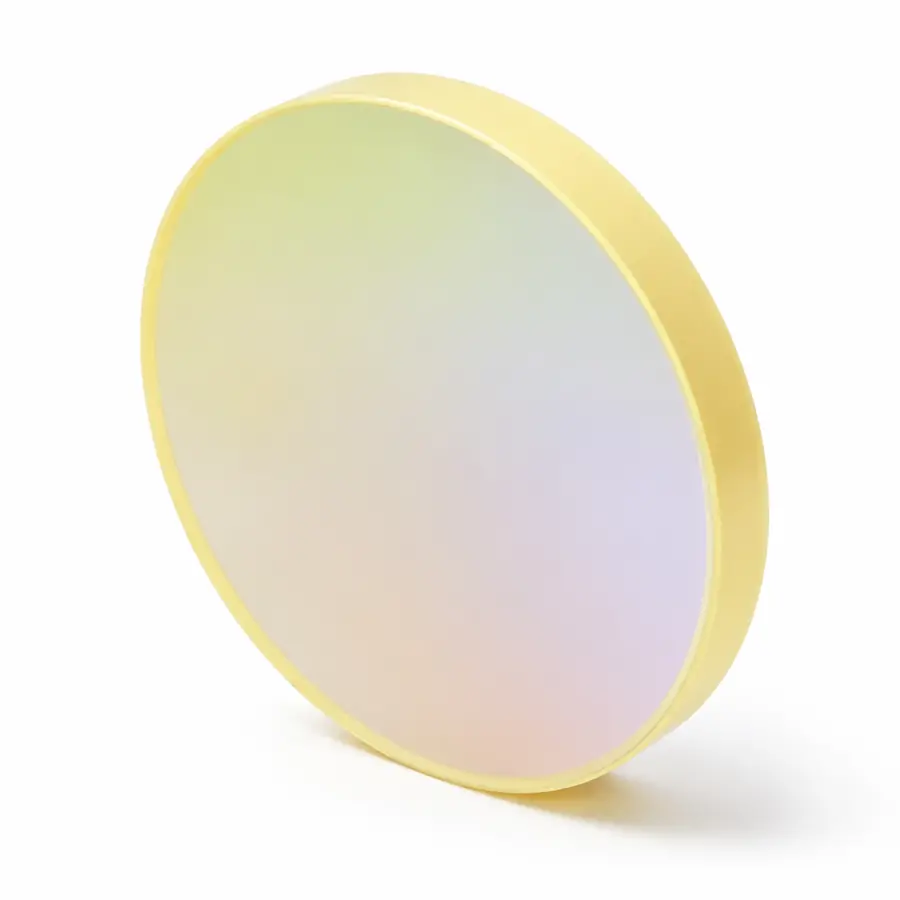
Cleartran ZnS Windows
Cleartran ZnS windows for visible-to-infrared multispectral apertures, thermal imaging, FLIR, astronomy, and rugged protective optical systems.
Quick Specifications
Product Description
Overview
Cleartran Zinc Sulfide (ZnS) windows are refined CVD ZnS optical components used when one aperture must support visible, MWIR, and LWIR optical paths. Cleartran is also known as multispectral ZnS and is often reviewed for windows, domes, lenses, beamsplitters, filters, and prisms in demanding optical systems.
Compared with standard CVD ZnS, Cleartran is processed after deposition to improve material purity and normalize the crystal structure. This processing helps reduce absorption and scatter, making the material useful where a single optical path must serve several spectral bands.
Why Cleartran ZnS Matters
Cleartran ZnS is selected when multispectral transmission and mechanical resistance must be balanced in one infrared window. It is chemically inert, non-hygroscopic, high purity, theoretically dense, and practical to machine into custom optical geometries.
- Useful visible-to-infrared transmission for systems combining visible cameras and infrared detectors.
- Higher mechanical robustness than ZnSe in harsh-environment window and dome applications.
- Low absorption and scatter across a broad usable transmission range when grade, thickness, coating, and surface quality are controlled.
- Compatible with diamond turning for windows, lenses, aspheric lenses, diffractive elements, beamsplitters, filters, and prisms.
Key Specification Reference
| Parameter | Engineering reference |
|---|---|
| Material | Cleartran ZnS, also called multispectral Zinc Sulfide |
| Typical transmission range | 0.4-12 µm; broader visible-to-far-IR review depends on grade, thickness, and coating |
| Refractive index | 2.350 at 0.63 µm; 2.289 at 1.06 µm; 2.252 at 4 µm; 2.200 at 10 µm |
| dn/dT | 54.3 × 10^-6/K at 0.6328 µm; 42.1 × 10^-6/K at 1.15 µm; 38.5 × 10^-6/K at 3.39 µm |
| Density | 4.09 g/cm3 |
| Knoop hardness | Approximately 160 kg/mm2 |
| Modulus of rupture | Approximately 8704 psi |
| Thermal expansion | 6.3 × 10^-6/K at 273 K; 7.0 × 10^-6/K at 373 K; 7.5 × 10^-6/K at 473 K |
Applications
- Visible imaging combined with infrared detection
- Thermal imaging and FLIR protective windows
- Multispectral sensor apertures
- Astronomy and broadband optical instruments
- Rugged windows and domes for mechanically demanding environments
Manufacturing and Surface Guidance
| Topic | Typical guidance |
|---|---|
| Manufacturable parts | Windows, lenses, aspheric lenses, binary or diffractive lenses, beamsplitters, filters, prisms, CNC-shaped blanks, generated lens blanks, and near-net-shape domes |
| Surface quality | 40-20 scratch-dig is often reviewed for 0.4-3 µm use; 60-40 or 80-50 may be reviewed for 3-12 µm use |
| Diamond-turned finish | Surface roughness is often specified around 100 Å rms or better depending on geometry and acceptance criteria |
| Surface figure | Visible and NIR requirements may range from 1/10 to 1/2 wave at 0.6328 µm; IR requirements often range from 1/2 to 2 waves at 0.6328 µm |
| AR coating options | BBAR coating may be reviewed for 0.8-2.5 µm, 3-5 µm, and 8-12 µm bands; custom bands between 0.4 and 12 µm can be reviewed |
Selection Notes
Cleartran ZnS can be a strong candidate when a system needs one optical aperture for visible imaging and IR sensing. It should still be selected against the real wavelength band, environmental exposure, mechanical loading, coating durability, and inspection criteria.
If a project only needs LWIR transmission and does not require visible or multispectral performance, standard ZnS, germanium, ZnSe, or another IR material may be more appropriate. If the part is exposed to dust, airflow, cleaning, impact, humidity, or shock, define the coating and mechanical requirements before quotation.
Request Engineering Review
For custom Cleartran ZnS windows or multispectral apertures, send wavelength band, clear aperture, outside dimensions, thickness, coating target, surface quality, environmental exposure, and drawing requirements through the contact form or email sales@iroptical.com.
Key Features
Applications
Related Products
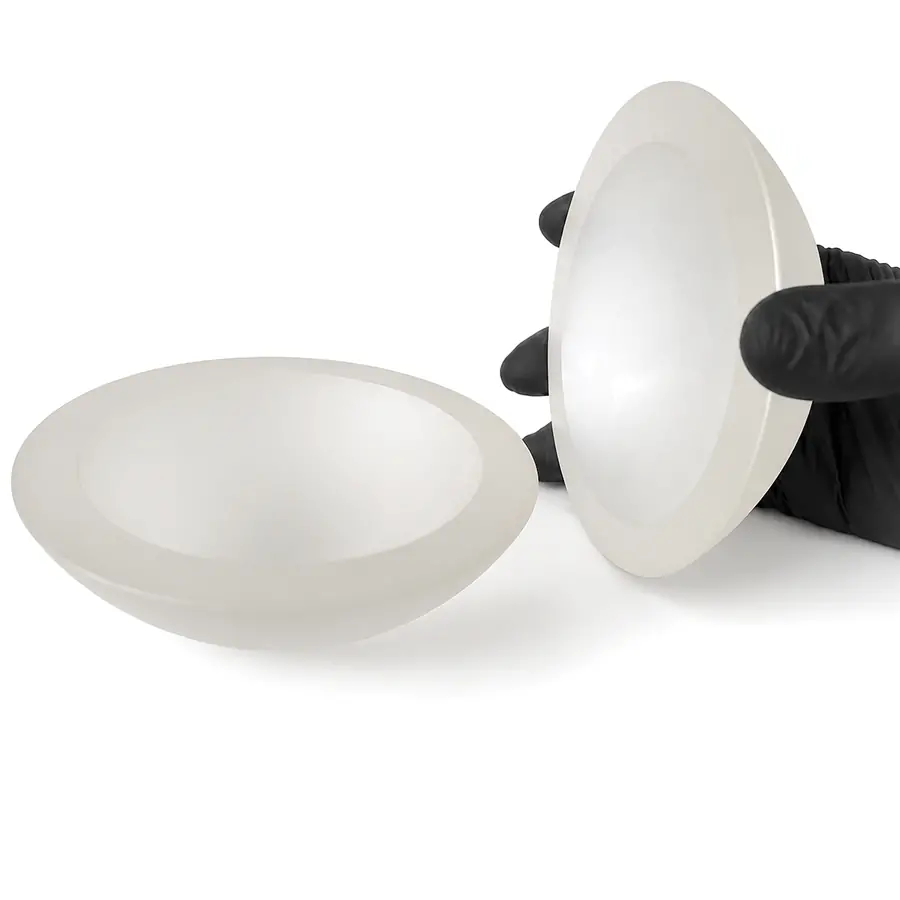
Cleartran ZnS Spherical Lenses
Cleartran ZnS spherical lenses for visible-to-LWIR multispectral focusing, collimation, and rugged optical assemblies with drawing-based engineering review.
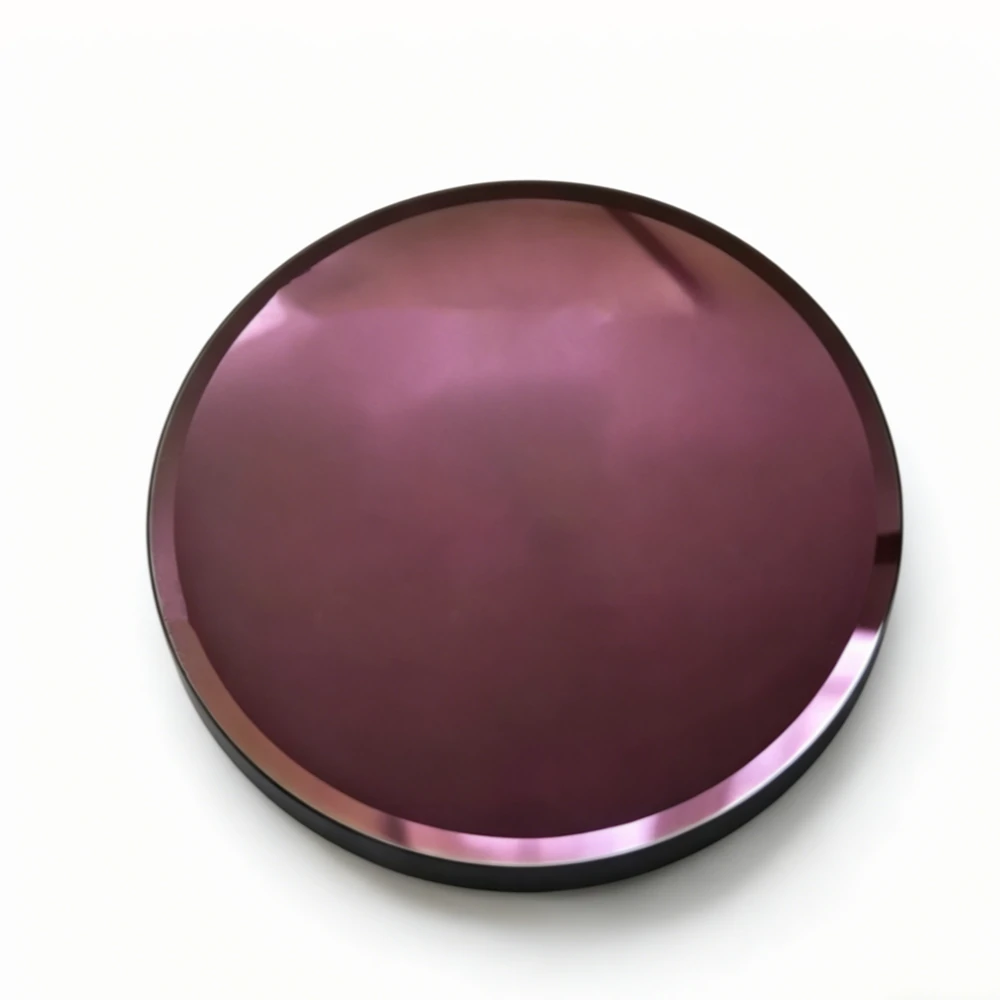
ZnS Optics
ZnS Optics for multispectral infrared imaging and protective optical assemblies, with Cleartran ZnS material, custom size review, and coating options.
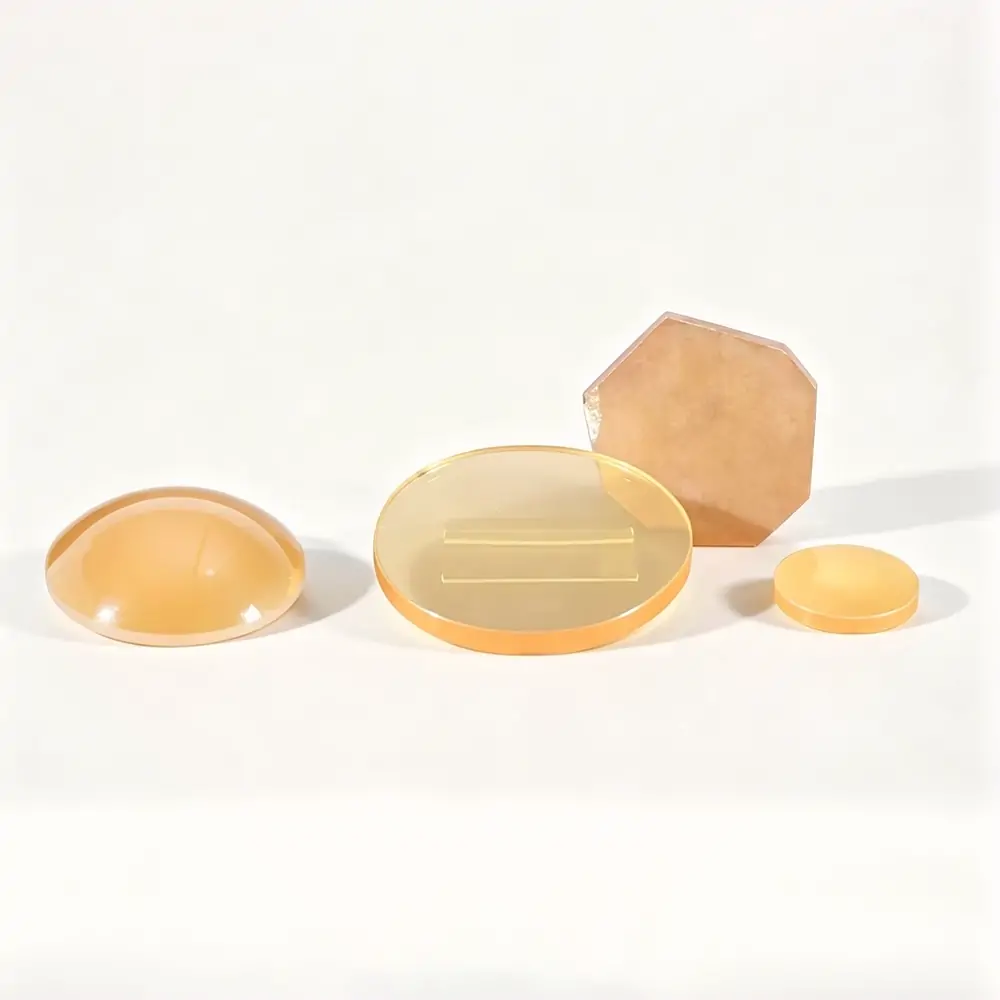
ZnS Plano-Convex Lenses
ZnS plano-convex lenses for MWIR and LWIR systems, offering durable zinc sulfide optics with custom sizes, AR coatings, and IR applications.
Helpful Resources